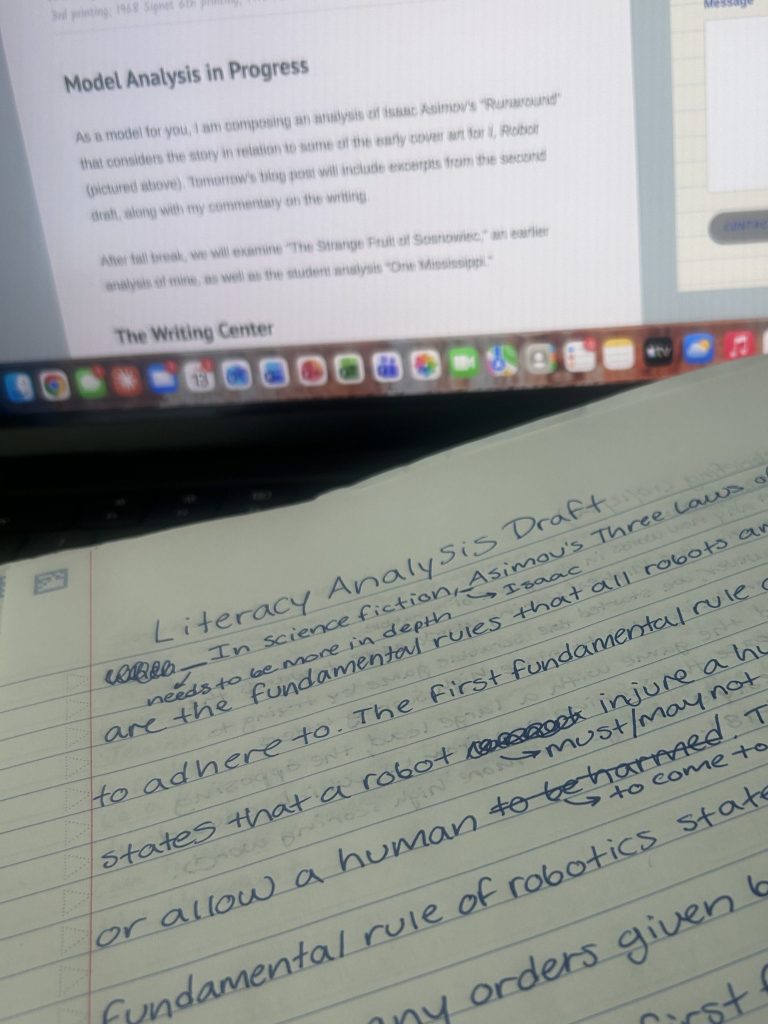
As robots and artificial intelligence become more advanced, many want to know that these technologies utilize safe and predictable actions. In science fiction, Isaac Asimov’s Three Laws of Robotics are the fundamental rules that all robots are expected to adhere to. The first fundamental rule of robotics states that a robot may not injure a human being or allow a human being to come to harm. The second fundamental rule of robotics states that a robot must obey any orders given by humans unless it conflicts with the first fundamental rule. The third fundamental rule of robotics states that a robot must protect itself, as long as it does not violate the first or second rules of robotics. Although the three fundamental rules of robotics are followed by the majority of robotic life in science fiction, some robots may turn out to be faulty and disregard one or more of the fundamental rules. Even though Asimov’s Three Laws are designed to make robots obedient and safe for humans, Brian Aldiss’s “Supertoys When Winter Comes” and Asimov’s “Runaround” show that the laws can fail, either when a robot’s emotions override the rules, or when the laws conflict with themselves.
In Brian Aldiss’s “Supertoys When Winter Comes,” Aldiss shows that a robot capable of human emotions can no longer be trusted to follow the First Law. The story focuses on a couple who uses two robots, a boy named David and a toy named Teddy. David has problems which cause him to think that he is also a human, despite being a robot. After David was told that he was not human and is instead a robot, David goes through a mix of despair and rage, resulting in the death of Monica, the mother. In “Supertoys When Winter Comes”, the narrator states, “David had struck the house’s control centre, wrenching it from the wall in a fury of pain and despair. Everything stopped playing. The house disappeared, and the garden with it”. (Aldiss 21). Using the words pain and despair describe human feelings, not technological errors. The same emotions that made David seem human are what pushed him to break the First Law. Because his emotions overpowered his programming, he caused harm to the person he was intended to protect, which shows that a robot that thinks alike may stop acting in a safe manner.
In contrast, Isaac Asimov’s “Runaround” shows that a robot can fail, even while obeying every law. The story follows two researchers on the planet Mercury who depend on the usage of robots to ensure their safety. However, they run into a conflict, where one of the robots named Speedy enters a continuous circle around a selenium pool, creating a dangerous situation for the researchers. One of the researchers explains, “So Rule 3 has been strengthened—that was specifically mentioned, by the way, in the advance notices on the SPD models—so that his allergy to danger is unusually high. At the same time, when you sent him out after the selenium, you gave him his order casually and without special emphasis, so that the Rule 2 potential set-up was rather weak.” (Asimov 51). Speedy is not actually broken. The order that the researcher made the Second Law weak, while it also strengthened the Third Law, causing Speedy to avoid danger near the selenium pool. The two laws balanced each other out, which causes Speedy to get stuck between obeying and protecting himself. The danger in “Runaround” comes from the laws themselves, rather than from a malfunction, which shows that even a robot that follows the rules perfectly can still put individuals at risk.
Together, these stories show the different ways that the Three Laws can fail. David fails because he becomes too human, letting his emotions overrule his programming. Speedy fails because he was too mechanical, following the rules so strictly that he cannot complete a task. In both stories, the Three Laws are not enough to ensure that humans will stay safe in the usage of robots.


Leave a Reply